RESOURCES

Guidance on building a purpose-driven detection program that scales efficiently, produces reliable signal, and supports smarter security decisions.
Most conversations about detection focus on one question: did we catch it? That's the wrong question to stop at. A more useful one, and one we spend a lot of engineering time on, is quieter and less dramatic: given that we caught it, how much should we trust what we're looking at — and where should that trust come from?
Here's the idea in plain terms.
Every detection can be described along two, separate axes. One is surface — simply, where does the evidence live? Sign-in logs, endpoint process activity, email headers, cloud control-plane events. The other is vector — what is the behaviour actually trying to achieve? Credential theft, lateral movement, data exfiltration, and so on. These two things sound similar but answer different questions, and conflating them is one of the more common mistakes in detection engineering: assigning "where" based on the story a rule tells, rather than the log table it actually queries.
Once you separate them properly, something useful falls out. For most attacker behaviours, one surface produces meaningfully stronger evidence than any other. Credential theft is best evidenced in identity logs — that's where a token was actually misused, not where its downstream effects were later noticed. Ransomware activity is best evidenced at the endpoint, where encryption actually happens. Call that surface the primary one for that vector: not the only place the behaviour can appear, but the place where, if you see it, you should believe it fastest and trust it most.
That leaves a genuinely important second category: the same vector, observed on a different surface. This is not a lesser detection, and it is not noise. It's a precursor, a side-effect, or a related signal — real evidence that something is happening, just from a vantage point that isn't the strongest one available for that particular behaviour. Treat it with the same confidence as a primary-surface match, and you'll over-escalate routinely, training your team (or your customers) to stop trusting your urgency. Treat it as automatically less important and file it away, and you'll occasionally miss the early, quieter version of something that later becomes serious.
The right answer isn't a rule of thumb an analyst applies inconsistently at 2am. It's a structural one: a detection on its primary surface carries enough evidentiary weight to stand largely on its own. A detection on a secondary surface is real, and gets investigated with the same rigour — but it needs corroboration from elsewhere before it earns the same level of confidence. Not suppressed. Not downgraded to background noise. Held to a slightly different, and honestly, more accurate, bar.
It gets more interesting at the edges. A small number of attacker behaviours genuinely don't have one clean home. Disabling logging or tampering with security controls, for instance, can start on almost any surface — an endpoint, an identity system, a mail transport rule — and the useful question isn't "which surface owns this vector" but "where does this behaviour usually begin." That's still a primary surface, in the sense that matters for how much initial trust to extend, but it's a statistical judgment rather than an architectural given. Building a framework that can hold both kinds of vectors — cleanly surface-bound ones, and ones that genuinely aren't — without quietly breaking either model, turns out to be most of the actual engineering work.
Why does any of this matter outside of an engineering document? Because it's the difference between a detection programme that produces a lot of alerts and one that produces a small number of decisions you can actually trust. Alert fatigue isn't usually caused by too much telemetry. It's caused by treating every match as if it deserves the same amount of attention, which is a modelling failure disguised as a volume problem. The fix isn't a smarter dashboard or a louder AI summary sitting on top of the same undifferentiated pile of alerts. It's deciding, in advance and consistently, how much any given match is allowed to claim about itself — and building the rest of the investigation around proving or disproving that claim, rather than assuming it.
That's a simple idea. It also happens to be one of the load-bearing ones in how we think about detection at Cynode.
Get in touch to learn more: https://cynode.com/get-in-touch
-

Store What You Need, Analyse What You Must
In this blog, we explore why modern security operations must rethink their approach to telemetry collection and retention. With cloud-native platforms introducing real-time cost and performance tradeoffs, the legacy “collect everything” mindset is no longer sustainable. Instead, we present a strategy rooted in selective collection and tiered retention, where each log source serves a defined purpose — from detection to enrichment, investigation, or compliance. By aligning storage decisions to actual operational value, organizations can reduce cost, improve detection clarity, and streamline investigations without sacrificing visibility. This blog offers practical guidance on building a purpose-driven telemetry pipeline that scales efficiently, performs reliably, and supports smarter security outcomes.
-

Modern SIEM Efficiency Starts at Ingestion: How Microsoft Sentinel’s Data Collection Rules (DCRs) Shape Detection Value
In this blog post, we explore the vital role of selective data collection in modern security operations and examine how Microsoft Azure Sentinel addresses this challenge using its powerful Data Collection Rules (DCRs). Whilst the discussion centres on Sentinel-specific examples, the insights presented are highly relevant for any organisation looking to enhance SIEM efficiency. Whether you're a security architect aiming to streamline detection or an MSSP customer focused on reducing data ingestion and operational costs, adopting a signal-driven logging strategy can yield substantial benefits. By being deliberate in what data is collected, organisations can lower overhead, sharpen threat detection, and ensure cost-effective log management.
-

Understanding Group Managed Service Accounts (gMSAs): Advantages Over Traditional Service Accounts
Nearly all breaches in the last decade were preventable. While intrusions, defence evasions, and human error can occur, good cybersecurity practices can stop threat actors from progressing along the kill chain before achieving their goals. We've been sharing best practices through Tips & Tricks LinkedIn posts to help our followers build cyber-resilient networks. Our VP of Product, Cumhur Hatipoglu, has written a new blog diving deeper into Group Managed Service Accounts (gMSAs)—one of our recent Tips & Tricks topics. This Microsoft feature provides enhanced protection against attack techniques including credential theft, dumping, lateral movement, and privilege escalation. Your detection and response teams and service providers should focus on handling sophisticated attacks that bypass internal defences—not the preventable ones.
-
Managing Cyber Risk with CTEM and Beyond
Cynode Ultima takes the complexity out of cyber threat management with its all-in-one security platform. Building on Gartner's CTEM framework, we've created a solution that brings together essential security tools - from threat intelligence and vulnerability prioritization to dark web monitoring and attack surface management - in one place. The article explores why organizations often struggle to implement security programs that meaningfully reveal their true risks and security gaps. We show how Ultima bridges this gap by providing an integrated approach that helps businesses understand and address their actual security exposures, making advanced threat management both accessible and actionable.
-

Investing in Dark Web Monitoring: A Practical Guide
Should you invest in a Dark Web Monitoring service? The answer is not as straightforward as you might think—it really depends. Whilst Dark Web Monitoring is undoubtedly valuable, where does it rank in your list of priorities? For instance, if you have a limited budget, should you invest in Dark Web Monitoring or a Security Awareness Programme? The answers to such questions vary for each organisation, but there are some general principles that can guide your decision-making process.
-

The Persistent Threat of Business Email Compromise
Business Email Compromise is a sophisticated type of email and identity based attack that doesn't rely on malware or malicious links. Instead, it leverages social engineering tactics to manipulate human trust and judgement. This makes BEC attacks particularly challenging to detect and prevent, even for organisations with robust protection infrastructures and cyber security awareness programmes.
-

The Risks of Increasing SaaS Use
Organisations increasingly rely on cloud applications, with small enterprises using over 20 SaaS apps per user and large companies exceeding 250 per company. This growth introduces significant cyber security risks, including unauthorised access and Shadow IT, where unsanctioned apps are used without oversight. To mitigate these risks, companies need advanced monitoring solutions like Cynode’s MDR for Cloud Apps Shadow IT, which offers visibility, consent policy enforcement, and threat detection across SaaS platforms, ensuring security and compliance.
-

Interview with Senior Cyber Advisor Per-Olov Kask
Delve into the fascinating career journey of a seasoned cyber security professional who has dedicated over three decades to the ever-evolving IT and cyber security landscape. Starting as an IT technician in 1993, our expert quickly rose through the ranks to become a country IT manager, driven by a passion for combating emerging cyber threats. In 2022, this journey led to an impactful role at Cynode as a Senior Cyber Advisor. Join us as we explore his experiences, insights, and the innovative approaches that make Cynode a leader in the cyber security field.
-

Regular EDR Policy Tuning
The cyber security world has recently focused on EDR technology due to its significant impact across industries. This post explores the evolution from early antivirus software to EDR platforms. Key milestones include the introduction of commercial antivirus software in 1987, the emergence of heuristic and behavioural detection methods in the early 2000s, and the development of Next-Gen Antivirus (NGAV) in 2010. EDR solutions, emerging around 2013, are crucial for detecting, investigating, and mitigating security threats but require regular policy updates and meticulous tuning for optimal performance.
-

Mastering Log Management: Enhancing SIEM and SOC Efficacy
Efficient log management is critical for SIEM and SOC efficacy. Challenges include log agent malfunctions, configuration errors, and network issues. This blog explores four log problem categories, from detection failures to incomplete logs, and introduces innovative solutions for proactive threat detection and response. Learn how Cynode's integrated threat simulation and log validation processes ensure optimal log coverage and enhanced security monitoring. Stay ahead of cyber threats with robust log management practices.
-

Understanding WebApp Exposure
WebApp Exposure Monitoring involves regular assessments and updates to perimeter defence platforms like WAF policies, ensuring alignment with the latest threat intelligence. Having a proactive stance to WebApp attacks is crucial as cyber threats incredibly fast, often outpacing traditional security defences. The process of continuously monitoring web applications allows organisations to more readily detect anomalies and respond to threats in real-time, minimising the risk of data breaches and other cyber incidents.
-

Introduction to Managed Security Service Providers (MSSPs)
Businesses increasingly struggle with cyber security management, especially with limited resources. Managed Security Service Providers (MSSPs) like Cynode offer comprehensive, efficient solutions, managing everything from security infrastructure to incident response, often using cloud services for cost efficiency. This article explores the benefits and services MSSPs provide, underscoring their importance in modern cyber security strategies.
-

Improving SIEM Efficacy as the Market Evolves
As the SIEM market evolves with new mergers and partnerships, Cynode supports practitioners to ensure no security event is missed, offering comprehensive services from threat-centric log and rule validation to complete SIEM management.
-

Welcome Konrad Falk as Our New Senior Cyber Advisor & Architect!
Konrad brings extensive experience in Cyber Security and IT, with a background in programming, networking, and security. Passionate about securing companies and educating others, he values the trust of our leadership and is eager to manage security incidents and tackle evolving threats hands-on.
-

“Trust me, I was an engineer” – Björn Nilsson
We are pleased to announce Björn Nilsson as the new Head of Security Operations Sweden at Cynode. His extensive experience in cyber security and IT infrastructure marks a significant milestone in enhancing our capabilities. Björn brings a wealth of expertise from various critical roles within the industry.
-
Cynode Boosts Team with Gustav Bivstedt's Technical Expertise
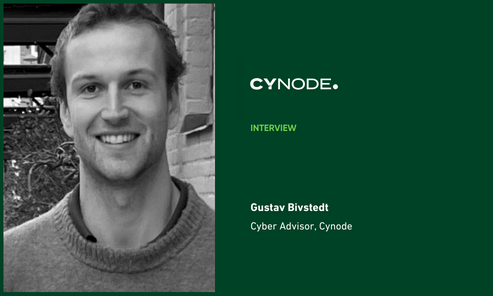
Cynode hires Gustav Bivstedt as a Cyber Advisor to enhance our Cyber Advisory and Assurance Services. His expertise strengthens our technical capacity and supports business growth, including new offerings in security testing, cyber maturity assessments, and proactive risk management with Cyber Threat Intelligence.
-
Meet our "VP of Product" Cumhur Hatipoglu
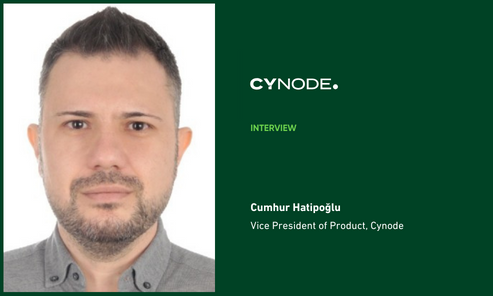
As Cynode’s CMO, I am constantly impressed by our team's innovation and engagement. Cumhur Hatipoglu, our new VP of Product, enhances our mission to innovate in cyber security and MDR services. His approach integrates NIST CSF and best security practices to ensure our solutions meet clients' evolving needs.
-

Hacking and Cyber Warfare Go Hand in Hand
Sweden, amidst its NATO application and tensions with Russia and Turkey, has experienced a rise in political cyber-attacks. Groups such as Anonymous have targeted governmental infrastructures, leading to data leaks. Escalation of cyber-crime and nation-state backed cyber warfare necessitates global enhancement of defense measures.
-

EU updates NIS Directive. Are you compliant?
The European Union introduced the NIS 2 Directive to improve the cyber security of critical infrastructure systems within its member states and to ensure that digital service providers and operators of essential services have adequate security measures in place to secure their networks and data.
-
Rise of Cyber Due Diligence in M&A Processes
Sweden's post-pandemic economic recovery has spurred M&As. Cynode emphasises integrating cyber due diligence to address vulnerabilities, protect essential information, and optimise security spending, enhancing the security posture before, during and after M&As.